Media platform
Horde: Self-hosted video archive and player
A private video platform that runs on your own hardware. Download from the web or import files, then browse, search, and watch in an interface built for a large archive.
View on GitHub (opens in a new tab)


- Role
- Design and build
- Status
- Released, source-available
- Built with
- ReactTypeScriptPythonFastAPISQLiteDocker
Context
Horde is a self-hosted platform for archival and playback of video libraries. It downloads from YouTube and other sites, and adds a library, player, and a transparent recommendation algorithm on top. It ships as one Docker container and supports a whole household, with an admin who decides what each account can do.
What it covers
- Download queue for YouTube and other sites, with quality presets, live progress, and playlist import
- Library organized by channel, with search, tags, continue watching, and catalogs of uploads not yet saved
- Player with theater and mini-player modes, Chromecast, AirPlay, chapters, subtitles, and SponsorBlock
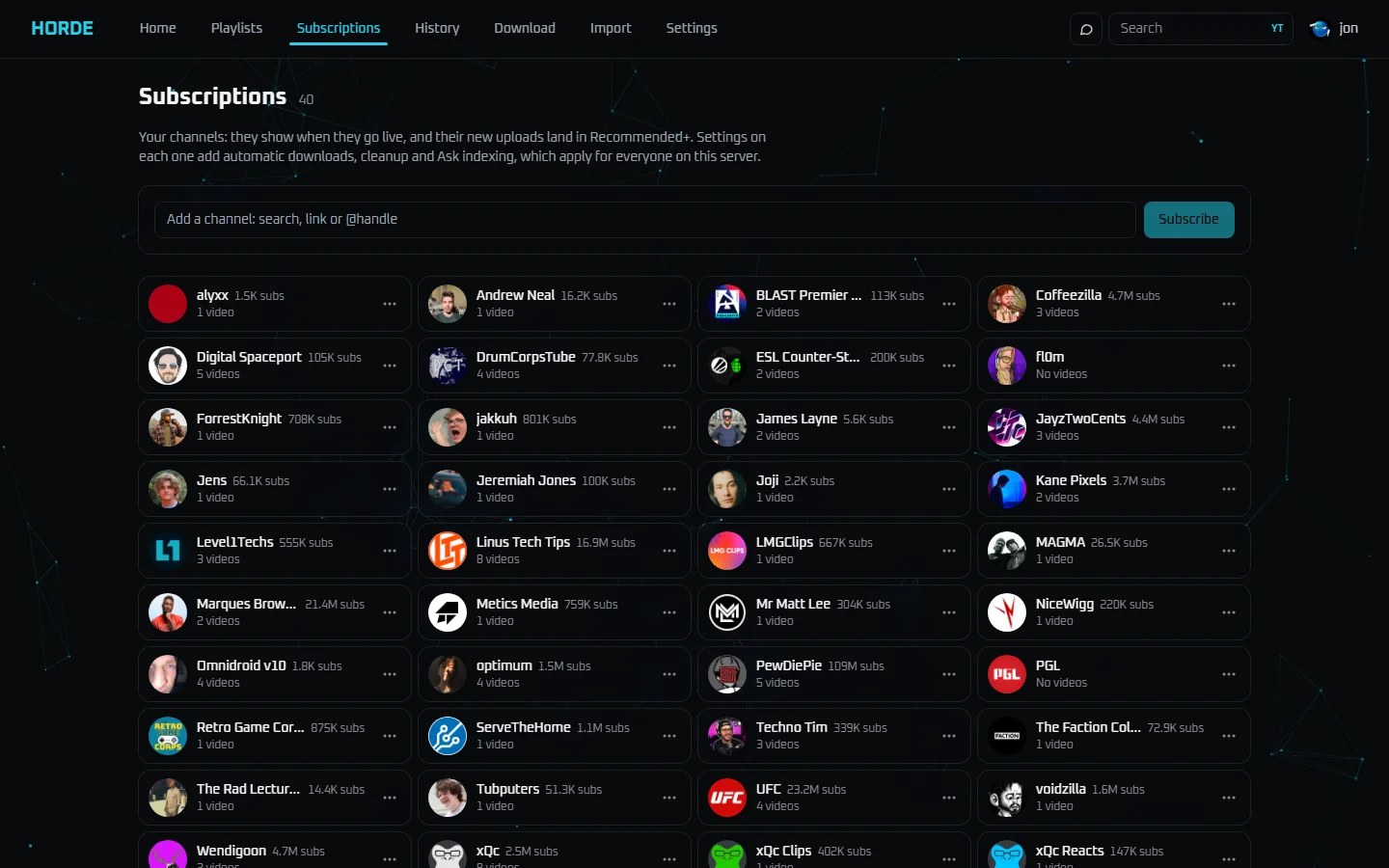
- Subscriptions that flag live streams and can download new uploads automatically, plus a tunable recommendation feed
- Household accounts with separate history and settings, and permissions set by an admin
- Optional AI through a local model or a cloud provider: summaries, chapters, semantic search, and answers that link to the exact moment in a video
Notes
Horde is a public release with documentation, a published Docker image for x86 and ARM, automated tests on every change, and an updater that rolls back on failure. The source is on GitHub under a noncommercial license.
It is an example of software shaped around one way of working: collect, organize, and find. A business tool can be built the same way, around the job it has to do.